
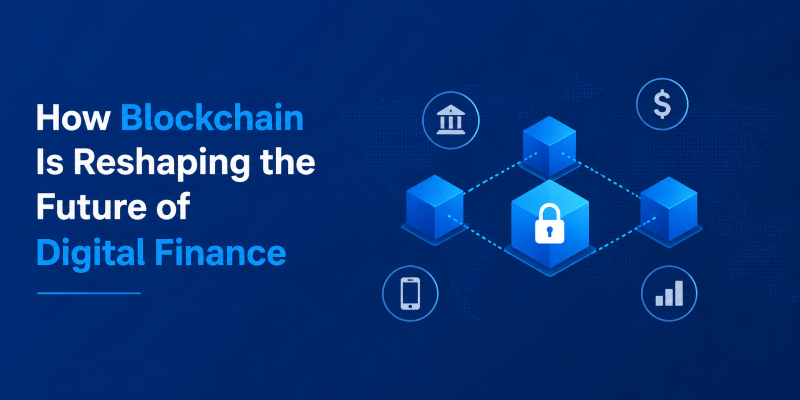
Money has always evolved. From bartering goods to metal coins, from paper currency to digital bank transfers, every era has brought a shift in how value is stored and moved. The emergence of blockchain technology represents the next major leap in that journey and this time, the change is not just incremental. It is structural.
Blockchain is not simply a new payment method or a speculative asset class. It is a new kind of infrastructure, one that allows value to move between people and institutions without relying on a central authority to verify, approve, or record the transaction. Understanding what that means in practice, and why it matters for the future of finance, is increasingly important for anyone operating in the digital economy.
What Blockchain Actually Does
At its core, a blockchain is a distributed ledger, a record of transactions that is maintained simultaneously across thousands of computers rather than stored in a single database controlled by one organization.
When a transaction is recorded on a blockchain, it is grouped with other recent transactions into a block. That block is then verified by a network of participants using cryptographic methods, and once confirmed, it is added permanently to the chain of previous blocks. Altering any historical record would require changing every subsequent block across the entire network simultaneously, a computational task so intensive it is effectively impossible.
This design solves a problem that has sat at the heart of digital finance for decades: how do you create a trusted record of ownership and exchange without a central authority you have to trust to maintain it? Banks, clearinghouses, and payment processors have historically filled that role. Blockchain removes the need for that intermediary entirely.
Also, Read Everything You Need to Know About Web3
The Financial Applications That Are Already Here
Blockchain is not a theoretical concept waiting for real-world use. A significant portion of today’s financial activity already runs on blockchain infrastructure.
Cryptocurrency payments and transfers. Bitcoin was the original application, a peer-to-peer electronic cash system that lets anyone send value to anyone else globally without a bank in the middle. Today, billions of dollars move daily across blockchain networks for everything from individual remittances to institutional settlements.
Decentralized Finance (DeFi): DeFi platforms use smart contracts self-executing code that lives on the blockchain to replicate financial services like lending, borrowing, and earning interest without banks or brokerages. A user in any country with internet access can deposit crypto assets into a DeFi protocol and earn yield, or borrow against their holdings, without a credit check or loan application.
Tokenization of real-world assets: Real estate, commodities, private equity, and even fine art are increasingly being tokenized on blockchains — represented as digital tokens that can be bought, sold, or fractionalized. This opens asset classes that were previously accessible only to large investors to a much broader pool of participants.
Cross-border settlements: Traditional international wire transfers can take two to five business days and involve multiple correspondent banks, each taking fees. Blockchain-based settlement systems can execute the same transfer in minutes at a fraction of the cost. Several central banks are actively developing their own digital currencies using blockchain infrastructure for exactly this reason.
Why This Matters for Investors
For investors, blockchain represents both an opportunity and a new category of risk to understand.
The opportunity side is well-documented. Early participants in Bitcoin, Ethereum, and several other blockchain ecosystems generated returns that no traditional asset class could match. But the more durable investment case for blockchain is not about price speculation on individual tokens. It is about the underlying infrastructure.
The companies and protocols building the rails of the decentralized financial system exchanges, wallets, lending protocols, tokenization platforms, payment infrastructure represent a genuine technology layer that is growing in adoption, transaction volume, and institutional recognition regardless of short-term price volatility in any single cryptocurrency.
Investors who understand that distinction between speculating on token prices and investing in blockchain infrastructure tend to make more considered decisions about where to allocate capital in this space.
The risk side is equally real. Regulatory frameworks for blockchain assets are still developing in most jurisdictions. Smart contract vulnerabilities have led to significant losses for DeFi users. Market liquidity in smaller tokens can be thin, making large positions difficult to exit cleanly. These are not reasons to avoid the space — they are reasons to approach it with genuine understanding rather than hype-driven enthusiasm.
The Regulatory Landscape Is Catching Up
One of the most significant developments in blockchain finance over the past two years is the accelerating pace of regulatory clarity in key markets.
The European Union’s MiCA (Markets in Crypto-Assets) framework, which came into full effect in 2024, created a comprehensive licensing regime for crypto asset service providers across EU member states. The UAE’s Virtual Asset Regulatory Authority has established one of the most functional licensing frameworks globally. Singapore’s Monetary Authority continues to develop its digital payment token regime with clarity and consistency.
This matters because regulatory clarity attracts institutional capital. Asset managers, banks, and insurance companies that were waiting for a defined legal framework to enter the crypto space now have one in multiple jurisdictions. The institutional adoption trend that many observers predicted is materializing — not in the explosive overnight fashion that retail speculation often expects, but in the steady, document-heavy way that institutions actually move.
The Road Ahead
Blockchain finance is not replacing the traditional financial system in the next five years. But it is building in parallel to it, and the two systems are increasingly interconnected.
The most interesting developments to watch include the continued growth of tokenized real-world assets, the maturation of DeFi lending markets toward institutional-grade risk standards, the rollout of central bank digital currencies in multiple major economies, and the ongoing consolidation of the crypto exchange landscape toward more regulated, compliant platforms.
For individuals and investors paying attention, the window to develop genuine fluency in how blockchain finance works before it becomes the background infrastructure of everyday financial life is still open. That fluency will matter, whether you are managing personal investments, building a business, or making decisions about where the next decade of financial innovation is heading.
The fundamentals of blockchain are not complicated. But like any infrastructure shift, the people who understand them early tend to navigate the transition far better than those who wait until the change is already obvious.
Also, Read Crypto Staking Explained: Earn Passive Income
Author Bio Nora daisy is a blockchain and digital finance writer covering crypto infrastructure, DeFi development, and Web3 market trends. They write for founders, investors, and enthusiasts navigating the evolving world of decentralized finance. Learn more at Cryptiecraft a Web3 development company building crypto exchanges, DeFi platforms, and blockchain solutions.