
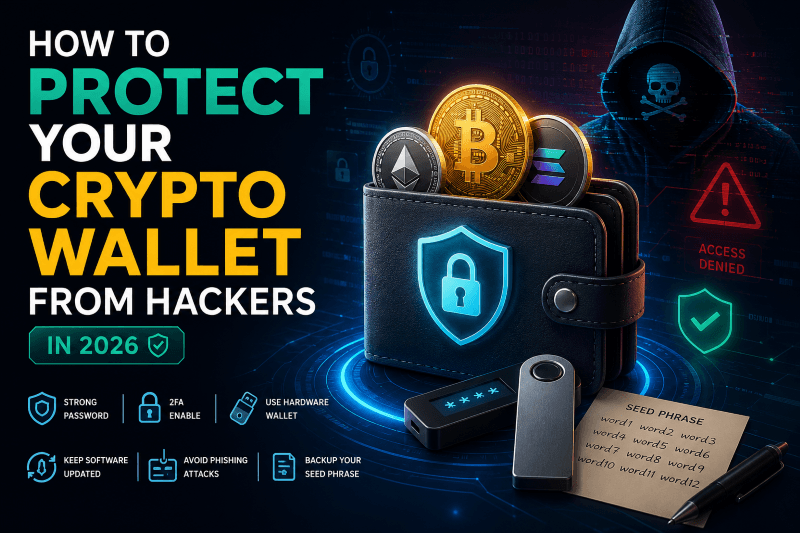
Introduction: The Critical Importance of Crypto Wallet Security in 2026
The cryptocurrency landscape in 2026 presents unprecedented opportunities for digital asset ownership, but it also harbors increasingly sophisticated threats from hackers, scammers, and malicious actors. With Bitcoin trading near $73,500 and the total cryptocurrency market cap hovering around $2.7 trillion, the stakes for protecting your digital assets have become astronomically higher. Unfortunately, the reality is stark: crypto wallets continue getting hacked in 2026, with billions of dollars lost annually to security breaches, phishing attacks, and user errors.
The decentralized nature of blockchain technology, while offering remarkable benefits like financial inclusion and efficient cross-border transactions, creates unique cybersecurity challenges. Unlike traditional bank accounts where you can freeze transactions or recover lost funds, cryptocurrency transactions are irreversible. Once hackers steal your crypto, there’s typically no way to recover it. This permanence makes proactive security measures absolutely essential.
This comprehensive guide will walk you through everything you need to know about protecting your crypto wallet from hackers in 2026. From understanding wallet types to implementing multi-factor authentication, recognizing scam attempts, and recovering after security incidents, we’ll cover every aspect of crypto security with practical, actionable advice that anyone can follow.
Types of Crypto Wallets: Understanding Your Options
Before implementing security measures, you must understand the different types of crypto wallets available and their respective security characteristics. Choosing the right wallet is the foundation of your security strategy.
Hardware Wallets (Cold Storage)
What They Are: Hardware wallets are physical devices that store your private keys offline. They’re considered the most secure option for storing cryptocurrency long-term.
Popular Models:
- Ledger Nano S and Ledger Nano X
- Trezor One and Trezor Model T
- SafePal
- KeepKey
How They Work: When you want to make a transaction, you connect the hardware device to your computer or smartphone, but your private keys never leave the device. The transaction is signed internally on the device and then sent to the blockchain.
Security Advantages:
- Private keys stored offline, immune to online hacking
- Protection even if your computer is compromised by malware
- Physical confirmation required for transactions (button press)
- Cannot be hacked remotely
Best For: Long-term holders, large amounts of cryptocurrency, people who want maximum security
Software Wallets (Hot Wallets)
What They Are: Software wallets are applications installed on your computer, smartphone, or web browser. They’re connected to the internet and offer convenient access to your funds.
Types:
- Desktop Wallets: Installed on your computer (e.g., Exodus, Electrum)
- Mobile Wallets: Apps on smartphones (e.g., Trust Wallet, MetaMask Mobile)
- Web Wallets: Browser-based (e.g., MetaMask browser extension)
Security Characteristics:
- Convenient for daily transactions and frequent trading
- More vulnerable to hacking than hardware wallets
- Subject to malware, phishing, and device compromise
- Easy to backup and recover
Best For: Small amounts, frequent transactions, active traders, beginners
Paper Wallets
What They Are: Paper wallets involve printing your public and private keys on paper. They’re completely offline and immune to online hacking.
How They Work: Generate keys using a secure offline computer, print them on paper, and store the paper in a safe location.
Security Advantages:
- Completely offline, no digital vulnerability
- No software to update or compromise
- Simple and inexpensive
Security Risks:
- Can be lost, damaged, or destroyed
- No backup unless you make multiple copies
- Physical theft risk
- Paper degrades over time
Best For: Emergency backup, storing seed phrases, ultra-long-term holders who understand the risks
Also, Read Bitcoin and Cryptocurrency Scams in 2025: $15 Billion Pig Butchering Fraud Exposed + Security Guide
Cloud Wallets
What They Are: Cloud wallets store your private keys on cloud servers managed by third-party providers.
Security Characteristics:
- Convenient access from any device
- Provider manages security updates
- Vulnerable to cloud provider hacks
- You don’t control your private keys directly
Best For: People who prioritize convenience over maximum security, small amounts
Multi-Signature Wallets
What They Are: Multi-sig wallets require multiple private keys to authorize transactions, adding redundancy and security.
How They Work: For example, a 2-of-3 multi-sig setup requires 2 out of 3 keys to approve a transaction. Keys can be stored on different devices or locations.
Security Advantages:
- No single point of failure
- Requires multiple confirmations
- Can recover access if one key is lost
- Reduces risk of single device compromise
Best For: Large holdings, businesses, organizations, people who want enhanced security
Exchange Wallets
What They Are: Wallets provided by cryptocurrency exchanges where you buy and trade crypto.
Security Reality: You don’t actually control the private keys. The exchange controls them, meaning you’re trusting the exchange to keep your funds safe.
The Golden Rule: “Not your keys, not your crypto” – if you don’t control private keys, you don’t truly own the cryptocurrency.
Best For: Only for amounts you’re actively trading. Move funds to your own wallet after trading.
Hot Wallet vs Cold Wallet Security: Making the Right Choice
Understanding the security differences between hot and cold wallets is critical for protecting your crypto assets in 2026.
Hot Wallet Security Profile
Definition: Hot wallets are online wallets connected to the internet, making them convenient but more vulnerable to hacking.
Security Vulnerabilities:
- Malware and Viruses: Malicious software on your device can steal private keys or intercept transactions
- Phishing Attacks: Fake websites or apps trick you into entering credentials
- Device Compromise: If your computer or phone is hacked, wallet access is compromised
- Network Attacks: Public Wi-Fi and unsecured networks can be intercepted
- Browser Exploits: Web-based wallets face browser-specific vulnerabilities
- Email Breaches: If your email is compromised, wallet recovery can be hijacked
Convenience Benefits:
- Instant access to funds
- Easy for daily transactions
- Quick trading capability
- Mobile accessibility
- No additional hardware needed
Best Use Case: Store only the cryptocurrency you need for everyday transactions in hot wallets. Keep the rest in cold storage to minimize risk.
Cold Wallet Security Profile
Definition: Cold wallets store assets offline, providing the highest level of security.
Security Advantages:
- Offline Storage: Private keys never touch the internet
- Malware Protection: Computer viruses cannot access offline keys
- Physical Confirmation: Transactions require physical device interaction
- No Remote Access: Hackers cannot access without physical device
- Durable Protection: Hardware designed to withstand tampering attempts
Security Limitations:
- Physical Theft: Device can be stolen if not stored securely
- Physical Damage: Device can be destroyed (fire, water, etc.)
- Seed Phrase Risk: If backup is compromised, all funds are vulnerable
- Less Convenient: Requires connecting device for transactions
- Setup Complexity: More technical knowledge required initially
Best Use Case: Store most of your cryptocurrency in cold storage for long-term savings. Only keep trading amounts in hot wallets.
The Hybrid Approach: Best Practice for 2026
The most secure strategy in 2026 involves using both hot and cold wallets strategically:
Recommended Storage Distribution:
| Amount Type | Wallet Type | Percentage |
|---|---|---|
| Daily spending | Hot wallet | 5-10% |
| Active trading | Hot wallet | 10-15% |
| Long-term holdings | Cold wallet | 75-80% |
| Emergency backup | Paper wallet | 5% |
Implementation Strategy:
- Keep small amounts in hot wallets for convenience
- Store 75-80% of holdings in hardware wallets
- Create paper wallet backups stored securely
- Diversify across multiple storage methods
- Never keep all crypto in one place
Why This Works:
- Limits exposure if hot wallet is compromised
- Hardware wallet protects majority of holdings
- Multiple backups prevent single-point failure
- Balance between security and accessibility
Setting Up Multi-Factor Authentication: Your Essential Security Layer
Multi-factor authentication (MFA), also called two-factor authentication (2FA), is one of the most important security measures you can implement. It requires two or more verification methods to access your accounts, making it significantly harder for hackers to steal your credentials.
Why 2FA is Non-Negotiable in 2026
The Problem with Passwords Alone:
- Passwords can be guessed, stolen, or cracked
- People reuse passwords across multiple sites
- Password databases are frequently breached
- Hackers use automated tools to test millions of passwords
How 2FA Protects You:
- Even if hackers steal your password, they still need your second factor
- Second factors are typically time-based or device-based
- Makes unauthorized access exponentially more difficult
- Blocks most automated hacking attempts
Statistics: Accounts with 2FA enabled are 99.9% less likely to be compromised than those without.
Types of 2FA Methods (Ranked by Security)
1. Hardware Security Keys (MOST SECURE)
Examples: YubiKey, Touch ID security keys
How They Work: Physical devices that connect via USB or NFC and generate cryptographic proofs
Security Advantages:
- Cannot be phished (verifies website authenticity)
- Requires physical possession
- Cryptographic protection
- No internet dependency
Best For: Protecting exchange accounts, wallet accounts with large holdings
Also, Read How to Spot Crypto Scams with Examples: Complete Guide
2. Authentication Apps (VERY SECURE)
Examples: Google Authenticator, Authy, 1Password, Bitwarden
How They Work: Apps generate time-based codes that change every 30-60 seconds
Security Advantages:
- Time-based codes expire quickly
- No SMS interception risk
- Works offline
- More secure than SMS
Setup Steps:
- Download authentication app on your phone
- Enable 2FA on your wallet/exchange
- Scan QR code with app
- Enter generated code to verify
- Save backup codes securely
Best For: Most users, daily wallet access, exchange accounts
3. Biometric Authentication (MODERATELY SECURE)
Examples: Face ID, Touch ID, fingerprint scanners
How They Work: Device uses your physical characteristics for verification
Security Advantages:
- Unique to you
- Fast and convenient
- Built into most modern devices
Security Limitations:
- Can be fooled with high-quality photos (Face ID)
- Device-specific (only works on enrolled device)
- Not universally available
Best For: Mobile wallet access, quick transactions
4. SMS Text Messages (LEAST SECURE)
How They Work: Service sends code via SMS to your phone
Security Advantages:
- Easy to set up
- No additional apps needed
- Universally available
Security Disadvantages:
- Can be intercepted via SIM swapping
- Vulnerable to phone network attacks
- SMS can be redirected
- Many countries have weak SMS security
Recommendation: Avoid SMS 2FA for crypto accounts if other options available. Use only as backup method.
5. Email-Based Verification (NOT RECOMMENDED FOR CRYPTO)
How They Work: Verification code sent to your email
Security Disadvantages:
- Email accounts frequently breached
- Email can be intercepted
- Not cryptographically secure
- Weak protection against sophisticated hackers
Recommendation: Never use email-only verification for crypto wallets or exchanges.
Implementation Best Practices for 2026
Enable 2FA Everywhere:
- All cryptocurrency exchanges
- Wallet accounts
- Email accounts (critical!)
- Any service storing crypto-related information
- Cloud storage accounts
Multiple 2FA Methods:
- Set up primary method (authentication app)
- Add backup method (hardware key)
- Save recovery codes offline
- Never rely on single 2FA method
Regular Testing:
- Periodically test that 2FA works
- Ensure backup devices are functional
- Verify recovery codes are accessible
- Update authentication app if phone changes
Emergency Access:
- Store backup codes in multiple secure locations
- Give trusted person access to backup codes
- Consider multi-sig for critical accounts
- Document 2FA recovery process
Best Backup Practices: Never Lose Access to Your Crypto
Proper backup is essential for crypto security. If you lose access to your wallet without a backup, your funds are permanently lost. Conversely, poor backup practices can expose your funds to hackers. The key is finding the right balance.
Also, Read Top 5 Best Crypto Wallets in 2025 for Security
Understanding Seed Phrases and Private Keys
What is a Seed Phrase?
- 12-24 word code that generates all your private keys
- Also called recovery phrase, private key, or master key
- Created when you set up your wallet
- THE MOST CRITICAL piece of information for your crypto
What are Private Keys?
- Cryptographic codes that prove ownership of cryptocurrency
- Used to sign transactions
- Must be kept secret
- Seed phrase generates all private keys
Golden Rules:
- Never share seed phrase with anyone
- Never store seed phrase digitally (no photos, screenshots, cloud)
- Never enter seed phrase on websites
- Only enter on your actual wallet device
- Anyone with seed phrase can steal all your funds
Backup Methods: Complete Guide
1. Paper Backup (Most Common)
How to Create:
- Write seed phrase on paper using pen (not pencil)
- Write clearly and accurately
- Double-check every word
- Use high-quality paper that won’t degrade
- Store in waterproof container
Security Storage:
- Store in fireproof safe
- Use bank vault for primary copy
- Multiple locations (home + bank)
- Waterproof and fireproof protection
- Away from obvious locations
Pros: Simple, inexpensive, offline, no digital vulnerability
Cons: Can be damaged, lost, or stolen; degrades over time
2. Metal Backup (Most Durable)
Products: Cryptosteel, Billfodl, Metalaid
How It Works: Seed phrase stamped onto stainless steel plates
Security Advantages:
- Fireproof (up to 2000°F+)
- Waterproof
- Corrosion-resistant
- Cannot be destroyed by normal means
- Lasts centuries
Best For: Long-term holders, emergency backup, primary backup for large holdings
Pros: Extreme durability, tamper-resistant, long-lasting
Cons: More expensive ($50-150), bulkier than paper
3. Digital Backup (NEVER FOR SEED PHRASES)
When Digital Backup is Acceptable:
- Encrypted wallet files (not seed phrases)
- Password-protected documents
- Hardware wallet backups
When Digital Backup is FORBIDDEN:
- ❌ Seed phrases written digitally
- ❌ Screenshots of seed phrases
- ❌ Photos of seed phrases
- ❌ Cloud storage of seed phrases
- ❌ Email containing seed phrases
- ❌ Text files with seed phrases
Why Digital is Dangerous:
- Hackers can access cloud accounts
- Malware can scan for seed phrases
- Screenshots can be transmitted
- Email can be intercepted
- Digital files can be corrupted
Rule: Seed phrases should ONLY be stored offline, never digitally.
4. Multi-Signature Backup (ADVANCED)
How It Works:
- Split seed phrase into multiple parts
- Store parts in different locations
- Require multiple parts to reconstruct
- Example: 3-of-5 setup (need 3 of 5 parts)
Security Advantages:
- No single point of failure
- Compromised part doesn’t expose full phrase
- Geographic distribution
- Requires physical access to multiple locations
Best For: Large holdings, sophisticated users, organizations
Backup Location Strategy
Recommended Distribution:
| Location Type | Purpose | Security Level |
|---|---|---|
| Home safe (fireproof) | Primary backup | High |
| Bank vault | Emergency backup | Very High |
| Trusted family member | Recovery backup | Moderate |
| Work office | Secondary backup | Moderate |
Key Principles:
- Never store all backups in same location
- Geographic distribution prevents single event from destroying all backups
- Consider theft, fire, flood risks for each location
- Test accessibility of each backup periodically
Backup Verification Checklist
Before You’re Done:
✓ Write seed phrase clearly and accurately
✓ Double-check every word against original
✓ Create multiple copies (minimum 2-3)
✓ Store in different secure locations
✓ Test backup by recovering wallet on different device
✓ Document recovery process for trusted person
✓ Waterproof and fireproof protection
✓ Not stored digitally anywhere
✓ No one else knows location of backups
After Setup:
✓ Test recovery every 3-6 months
✓ Verify backups are still accessible
✓ Check paper/metal for damage
✓ Update if device changes (phone, computer)
✓ Inform trusted person if needed
Also, Read Is Binance Safe? A 2025 Review of Its Security Measures
Recognizing Scam Attempts: Don’t Get tricked in 2026
Scammers in 2026 use increasingly sophisticated methods to steal crypto. Learning to recognize and avoid these scams is critical protection.
Common Crypto Scams in 2026
1. Phishing Websites (Most Common)
What It Is: Fake websites that look legitimate, designed to steal your credentials
How Scammers Do It:
- Create websites identical to real exchanges/wallets
- Send emails with links to fake websites
- Use social media to promote fake sites
- Buy ads for fake websites on search engines
Red Flags:
- URL slightly different from legitimate site (ledger.com vs ledgernano.com)
- Requests for seed phrase or private keys
- Urgent messages demanding immediate action
- Poor website design or spelling errors
- No HTTPS encryption (missing lock icon)
- Unfamiliar domain extensions (.com.co instead of .com)
Prevention:
- Always verify URL before entering information
- Never click links in emails for wallet access
- Bookmark legitimate sites and use bookmarks
- Use browser extensions that verify sites
- Never enter seed phrase on websites
2. Fake Support Requests
What It Is: Scammers pretending to be customer support
How Scammers Do It:
- Contact you via social media claiming to be support
- Send emails appearing to be from exchanges
- Create fake support chat windows
- Offer to “help” with wallet issues
Red Flags:
- Legitimate support will NEVER ask for seed phrase
- Support won’t contact you first via social media
- Requests for private keys or passwords
- Urgent problems requiring immediate action
- Promises of guaranteed returns or recoveries
Prevention:
- Never share seed phrase with anyone
- Contact support through official website only
- Verify support identity through official channels
- Remember: legitimate support cannot access your wallet
3. Impersonation and Celebrity Scams
What It Is: Scammers pretending to be famous people or companies
How Scammers Do It:
- Fake Elon Musk, Warren Buffett, or exchange CEO profiles
- Claim celebrity is giving away free crypto
- Fake company announcements about airdrops
- Impersonate legitimate projects
Red Flags:
- Unknown accounts claiming to be celebrities
- Promises of free crypto or guaranteed returns
- Requests to send crypto first to “verify” wallet
- Urgent time limits on offers
- Unusual payment methods requested
Prevention:
- Verify through official company channels
- Legitimate companies don’t give free crypto via social media
- Never send crypto to “verify” anything
- Research projects before investing
4. Malicious Apps and Software
What It Is: Fake wallet apps or software that steal your crypto
How Scammers Do It:
- Create apps with names similar to legitimate wallets
- Offer “free” wallet apps with hidden malware
- Distribute through unofficial sources
- Create fake browser extensions
Red Flags:
- Apps from unknown developers
- Not available on official app stores
- Requests for unnecessary permissions
- Poor reviews or no reviews
- Promises of guaranteed returns
Prevention:
- Only download from official sources (official websites, app stores)
- Verify developer name matches legitimate company
- Check reviews and download numbers
- Avoid apps from unknown sources
5. Pump and Dump Schemes
What It Is: Scammers artificially inflate price then sell, causing losses
How Scammers Do It:
- Coordinate social media promotion
- Create fake buying pressure
- Claim “guaranteed” returns
- Use celebrity endorsements (fake)
Red Flags:
- Promises of guaranteed returns
- Urgent “buy now” messages
- Unknown projects with no real utility
- Anonymous teams
- Excessive hype without substance
Prevention:
- Research projects thoroughly
- Never invest based on hype alone
- Understand that guaranteed returns don’t exist
- Diversify investments
6. Romance and Friend Scams
What It Is: Scammers build relationships then request crypto investments
How Scammers Do It:
- Create fake profiles on dating apps
- Build trust over weeks/months
- Eventually request investment in crypto
- Claim it’s for “future together”
Red Flags:
- Quick relationship progression
- Requests for money/investments
- Avoids meeting in person
- Inconsistent stories
- Urgent financial emergencies
Prevention:
- Never invest based on relationship pressure
- Verify identity through multiple channels
- Be skeptical of investment requests
- Remember: real relationships don’t start with money requests
General Scam Prevention Rules
Never Do These Things:
- ❌ Never share seed phrase with anyone
- ❌ Never enter seed phrase on websites
- ❌ Never send crypto to “verify” wallet
- ❌ Never trust unsolicited contact offering help
- ❌ Never click suspicious links
- ❌ Never download unknown apps
- ❌ Never invest based on hype alone
- ❌ Never trust guaranteed returns
Always Do These Things:
- ✓ Verify all information through official channels
- ✓ Use hardware wallets for large amounts
- ✓ Enable 2FA on all accounts
- ✓ Keep software updated
- ✓ Research before investing
- ✓ Use secure networks (not public Wi-Fi)
Recovery Procedures After a Security Incident: What to Do If Hacked
If your crypto wallet is compromised despite your best precautions, immediate action is crucial. While recovered funds are rare, following these steps maximizes your chances and protects remaining assets.
Immediate Actions (First 24 Hours)
Step 1: Stop All Transactions Immediately
What to Do:
- Do not attempt to transfer remaining funds
- Do not contact anyone claiming to help recover funds
- Do not respond to scam messages
Why: Moving funds can alert hackers to your discovery and they may try to divert remaining assets. Legitimate recovery companies won’t contact you first.
Step 2: Secure Your Remaining Assets
What to Do:
- Move any funds in other wallets to new secure wallets
- Create new hardware wallets for remaining funds
- Generate new seed phrases (never reuse compromised ones)
- Enable 2FA on all exchange accounts
- Change passwords for all crypto-related accounts
Why: Hackers may have accessed multiple accounts. Protect remaining assets immediately.
Step 3: Document Everything
What to Record:
- Date and time of suspected breach
- All transactions during and after breach (TXIDs)
- Amounts stolen
- Wallet addresses of thieves (if visible)
- Screenshots of suspicious activity
- Any messages or communications from hackers
- How you discovered the breach
Why: Documentation is essential for reporting to authorities, exchanges, and potential recovery efforts.
Step 4: Report to Relevant Authorities
Where to Report:
1. Cryptocurrency Exchanges:
- Report if funds were on exchange
- Request transaction blocking
- Exchange may freeze thief’s accounts
2. Law Enforcement:
- File report with local police
- Contact FBI Internet Crime Complaint Center (IC3) if in US
- Report to national cybercrime units
3. Blockchain Analytics Companies:
- Chainalysis
- CipherTrace
- They may track stolen funds
4. Crypto-Specific Reporting:
- CryptoFraudReporting.org
- Missing Crypto.com
Why: Official reports create paper trail and may help future investigations.
Step 5: Public Awareness (If Appropriate)
What to Do:
- Alert community on social media (if public project)
- Report to project’s official channels
- Warn others about specific scam
Why: Prevents others from being victimized by same scam.
Medium-Term Actions (Days 1-30)
Step 6: Full Security Audit
What to Check:
- Review all devices for malware
- Check email for unauthorized access
- Verify all connected accounts
- Review transaction history for unauthorized activity
- Check for suspicious apps or software
Actions:
- Install fresh antivirus software
- Reformat and reinstall devices if compromised
- Change all passwords
- Review all account permissions
- Enable 2FA everywhere
Why: Breach may have multiple entry points. Complete audit prevents repeated attacks.
Step 7: Notify Trusted Contacts
What to Do:
- Inform family member or trusted person
- Share what happened (for their awareness)
- Provide contact information if scammers contact them
- Establish verification process for future requests
Why: Scammers often contact family/friends after breaching someone. They need to be aware.
Step 8: Consider Professional Recovery Services (CAUTIOUSLY)
Reality Check:
- Most “recovery services” are scams
- Very few stolen funds are actually recovered
- Be extremely skeptical of any service
Red Flags of Recovery Scams:
- Guarantee recovery (impossible)
- Request payment upfront
- Ask for your seed phrase
- Contact you first claiming to help
- No legitimate reviews or credentials
Legitimate Options:
- Reputable blockchain security firms
- Law enforcement cybercrime units
- Authorized forensic investigators
- Never pay before confirming legitimacy
Important: Most reports indicate less than 5% of stolen crypto is recovered. Protect remaining assets rather than chasing recovery.
Long-Term Actions (Months 1-6+)
Step 9: Implement Enhanced Security
New Security Measures:
- Switch to hardware wallets for all holdings
- Implement multi-signature wallets
- Set up additional 2FA methods
- Create backup strategy with metal backups
- Use dedicated devices for crypto only
- Implement password manager
- Regular security audits
Why: Breach shows your security was insufficient. Upgrade to prevent future incidents.
Step 10: Learn and Educate
What to Do:
- Study how breach occurred
- Read security guides and resources
- Join crypto security communities
- Share experience (anonymously) to help others
- Stay updated on new threats
Why: Understanding breach helps prevent future incidents. Education is your best protection.
Step 11: Legal Considerations
If Significant Amounts Lost:
- Consult with attorney specializing in crypto
- Consider civil litigation if thief identified
- File insurance claims (if applicable)
- Document all expenses related to breach
Why: Legal action may be necessary for significant losses. Professional guidance helps.
Emotional Recovery
Important: Crypto theft is emotionally devastating. It’s normal to feel:
- Anger
- Frustration
- Shame
- Anxiety
- Loss of trust
Actions:
- Talk to trusted friends/family
- Consider counseling if severe
- Don’t isolate yourself
- Remember: this happens to many people
- Focus on future security, not past mistakes
Conclusion: Security is Your Responsibility
Protecting your crypto wallet from hackers in 2026 requires vigilance, education, and consistent security practices. The decentralized nature of cryptocurrency means that security is entirely your responsibility—there’s no bank to call when funds are stolen.
Key Takeaways:
- Use hardware wallets for long-term holdings (75-80% of funds)
- Enable 2FA everywhere using authentication apps or hardware keys
- Never share your seed phrase with anyone
- Backup seed phrases offline on paper or metal in multiple locations
- Recognize and avoid common scams
- Follow recovery procedures immediately if compromised
- Stay educated about emerging threats
The cryptocurrency ecosystem in 2026 offers incredible opportunities, but success depends on your ability to protect your assets. By following the comprehensive security measures outlined in this guide, you significantly reduce your risk of becoming a victim. Remember: security is not a one-time setup but an ongoing commitment. Stay vigilant, stay educated, and your crypto investments will be protected for the long term.
Your crypto security starts today. Don’t wait until you’re hacked.