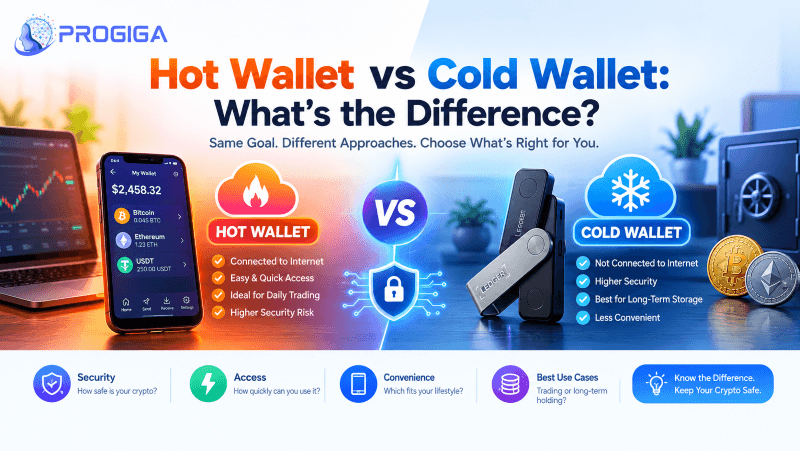
A self-custody wallet gives you full control of your crypto, and full responsibility for it. There is no password reset and no help desk that can restore access. Everything depends on one thing: the recovery phrase, often called the seed phrase.
Lose that phrase and a broken phone can mean lost funds. Expose it and anyone can empty the wallet from anywhere in the world. Most backup guides simply list storage options. This one starts from the other end: the specific ways backups fail, and which methods protect against each one.
What a Seed Phrase Actually Is
Most modern wallets create a 12- or 24-word recovery phrase using the BIP-39 standard (https://github.com/bitcoin/bips/blob/master/bip-0039.mediawiki). The wallet generates random data, encodes it as words from a fixed list of 2,048 English words, and derives all of your private keys from those words.
Two practical consequences follow:
– The phrase is the wallet. Anyone with the words, plus any optional passphrase, can rebuild your wallet in any compatible app on any device.
– The device is replaceable. If your phone or hardware wallet is lost or broken, the phrase lets you restore everything on a new one.
That is why a backup matters more than the device itself.
H2: The Five Threats a Backup Must Survive
Before choosing a method, it helps to name what you are defending against:
1. Physical damage: fire, flood, fading ink or simple wear.
2. Theft: someone finds the backup and uses it.
3. Loss: you forget where it is, or it gets thrown away during a move.
4. Your own absence: illness or death leaves family with no way to access funds.
5. Social engineering: you are tricked into typing or reading the phrase to a scammer.
No single method beats all five. A good setup combines methods so each covers the others’ weak spots.
Option 1: Paper
Writing the words on paper is the default for a reason. It is free, offline and immune to malware.
Where paper fails
– Fire and water destroy it quickly.
– Pencil smudges and some inks fade over years.
– One sheet is a single point of failure.
How to use paper well
– Write clearly, number each word, and double-check the spelling against the BIP-39 word list.
– Store it in a sealed bag inside a fire-resistant container.
– Verify it once by restoring the wallet on a spare device or in a wallet’s “check backup” feature, if available.
Paper is a reasonable starting point for small amounts, but it is rarely enough on its own for meaningful savings.
Option 2: Metal Plates
Stamped or engraved steel and titanium plates are built to survive house fires and floods far better than paper.
Where metal fails
Metal protects against physical damage, not access. A steel plate in a drawer is simply a more durable thing to steal. It also does nothing to help a relative who doesn’t know it exists.
How to use metal well
– Choose a plate or capsule made for seed storage and stamp the first four letters of each word, which is enough to identify every BIP-39 word.
– Store it somewhere that is both secure and known to at least one trusted person or documented in your estate plan.
Option 3: Multiple Copies in Different Places
Keeping two or three copies in separate locations, such as home and a bank safe-deposit box, protects against loss and local disasters.
Where multiple copies fail
Every copy is another place the phrase can be found. More copies means more resilience but a bigger attack surface.
Avoid splitting the words yourself
A common improvisation is to store words 1–12 in one place and 13–24 in another. This weakens security: each half gives an attacker a large head start, and losing either half can lock you out.
If you need true distribution, use schemes designed for it:
– Shamir backups (supported by some hardware wallets) split a secret into shares, where a set number, such as two of three, can restore the wallet and fewer reveal nothing useful.
– Multisignature wallets require several independent keys to approve a transaction, so no single backup controls the funds.
Both add complexity, so practise a full recovery before relying on them.
Option 4: Digital Storage
Photos, cloud notes, email drafts and password managers are tempting because they are convenient and easy to recover.
Where digital storage fails
A digital copy is exposed to every device, account and sync service it touches. Screenshots and cloud documents are a well-known target for malware, phishing and account takeovers. Once a phrase leaves offline storage, you can never be fully sure who else has seen it.
If you go digital anyway
– Never store the phrase as a plain photo, screenshot or unencrypted note.
– Use a reputable, encrypted password manager with strong two-factor authentication.
– Treat this as a convenience trade-off, not as equivalent to an offline backup.
For most people, keeping the seed phrase fully offline is the safer default.
Option 5: Adding a Passphrase
BIP-39 supports an optional passphrase, sometimes called the “25th word”. The passphrase is combined with your words to create a completely different wallet.
What it fixes
A stolen seed phrase alone is no longer enough. An attacker also needs the passphrase.
What it adds
A new failure mode. If you forget the passphrase, the funds are unrecoverable, even with the words. The passphrase needs its own backup, stored separately from the phrase, and someone you trust may need to know how to find it.
The Failure No Storage Method Can Fix
The most common way people lose crypto is not a fire or a burglary. It is typing the phrase into the wrong place.
Remember these rules:
– No legitimate wallet, exchange or support team will ever ask for your recovery phrase.
– “Wallet validation”, “sync” or “airdrop claim” pages that ask for your words are scams.
– Support agents who contact you first on social media or messaging apps are almost always impersonators.
– Only enter the phrase when you are restoring a wallet yourself, in an app you installed from an official source.
A perfect metal backup offers no protection if you hand the words over voluntarily.
Plan for Someone Else to Recover It
A backup that only you can find protects you while you are around. Consider:
– Leaving clear instructions, without the phrase itself, on where the backup is and how to use it.
– Telling a trusted person, or documenting in an estate plan, that crypto exists and how to approach recovery.
– Reviewing the plan whenever you change wallets or storage locations.
Limit What Is at Stake
Good backups reduce risk; good habits reduce how much any single mistake can cost.
– Keep long-term holdings in a wallet that never connects to new or unfamiliar apps.
– Use a separate, lightly funded “everyday” wallet for experimenting with DeFi, NFTs or new dApps.
– Review and revoke old token approvals from time to time.
A Quick Seed Phrase Backup Checklist
– Phrase written clearly, numbered and checked against the BIP-39 list
– At least one copy on fire- and water-resistant material
– Copies stored in separate secure locations, with no DIY word-splitting
– No plain screenshots, photos or cloud notes
– Optional passphrase backed up separately, if used
– Recovery tested once on a spare device
– A trusted person knows how to start recovery
– You will never type the phrase into a site, form or chat
Final Thoughts
Self-custody is only as strong as its backup. Start by naming the risks you face, then pick a combination of methods that covers them, typically an offline durable copy, a second location and a clear recovery plan. Above all, treat your recovery phrase as something you will never share, with anyone, for any reason.
Author Bio
The RhinoBetting Editorial Team writes practical guides on wallet security, self-custody and safe stablecoin use. RhinoBetting is a wallet-based crypto casino and sportsbook for adults aged 18+. We disclose that affiliation openly, and this article contains no promotional content. Our guides focus on clear, verifiable, step-by-step advice that helps readers avoid common and costly mistakes. Website: https://rhinobetting.com“
Disclaimer: This article is for educational purposes only and is not financial advice. Cryptocurrency carries risk of total loss. Always verify addresses, test transactions, and secure your seed phrase. Buy hardware wallets only from official manufacturers.